The piping discipline plays a critical role in the oil & gas, petrochemical, power plant, water treatment, and industrial construction sectors. Whether you are a fresher or an experienced professional, these top 100 piping interview questions will help you revise key concepts quickly and confidently.
Piping interview tests both basic understanding and practical site knowledge. So let’s go forward to learn all those basic and must-know details.
Table of Contents
Basic Piping Fundamentals (1–15)
1. What is piping engineering from a site execution perspective?
Piping engineering on site involves installation, alignment, welding, testing, commissioning, and handover of piping systems in accordance with approved drawings, specifications, codes, and safety requirements.
2. What is the difference between a pipe and a tube?
Pipes are identified by Nominal Pipe Size and schedule and are used for fluid transport, whereas tubes are identified by outside diameter and thickness and are commonly used in heat exchangers and instrumentation.
3. What is Nominal Pipe Size (NPS)?
Nominal Pipe Size is a standardized sizing designation that represents the approximate size of a pipe but does not indicate actual dimensions.
4. What is pipe schedule and what does it indicate?
Pipe schedule indicates wall thickness and indirectly represents the pressure-handling capacity of the pipe.
5. What is the difference between OD, ID, and NB?
Outside Diameter is the external diameter, Inside Diameter is the internal diameter, and Nominal Bore is a non-dimensional size reference similar to NPS.
6. What is meant by design pressure and design temperature?
They are the maximum pressure and temperature values considered during piping design, including normal and upset operating conditions.
7. What is corrosion allowance and why is it provided in piping design?
Corrosion allowance is additional wall thickness added to compensate for material loss due to corrosion over the service life.
8. What is a piping line number and how is it structured?
A piping line number uniquely identifies a line and typically includes size, service, material class, insulation, and sequence number.
9. What is a piping General Arrangement (GA) drawing?
A GA drawing shows the overall piping layout, elevations, routing, and interfaces with equipment and structures.
10. What is a piping isometric drawing?
A piping isometric is a detailed drawing showing pipe dimensions, fittings, welds, materials, and orientation for fabrication and erection.
11. What are critical piping lines?
Critical lines are those carrying high pressure, high temperature, hazardous fluids, or essential services requiring priority execution and strict control.
12. What is a piping class and why is it important?
A piping class defines material specifications, fittings, flanges, pressure ratings, and service limits for standardization and safety.
13. Why is flow direction important in piping systems?
Correct flow direction ensures proper functioning of valves, instruments, and equipment.
14. What is the difference between piping and plumbing systems?
Piping systems are industrial and process-oriented, whereas plumbing systems are domestic and utility-based.
15. What are the primary documents used by a piping site engineer?
GA drawings, isometric drawings, specifications, ITPs, WPS, material certificates, test packs, and method statements.
Pipes, Fittings & Flanges (16–35)
16. What types of pipes are commonly used in industrial piping systems?
Carbon steel, stainless steel, alloy steel, duplex steel, and non-metallic pipes, depending on service.
17. What is the difference between seamless and ERW pipes?
Seamless pipes are manufactured without welds, while ERW pipes have a longitudinal welded seam.
18. What is the difference between ASTM and ASME standards?
ASTM covers material specifications, while ASME covers design, fabrication, inspection, and testing codes.
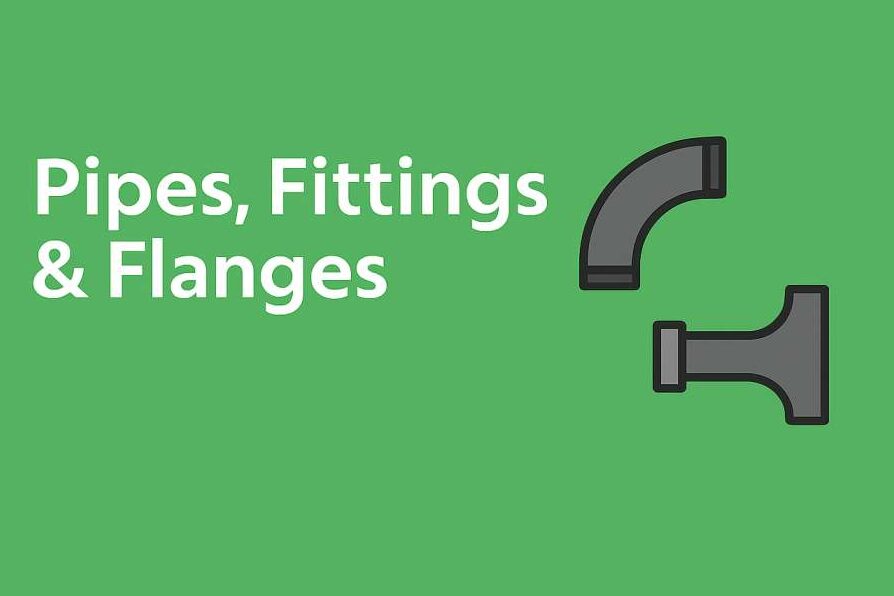
19. What are pipe elbows and what are their standard angles?
Elbows are fittings used to change flow direction, commonly available in 45°, 90°, and 180° angles.
20. What is the difference between long radius and short radius elbows?
Long radius elbows have a radius of 1.5D and reduce pressure drop, while short radius elbows have a 1D radius and are used where space is limited.
21. What is a pipe tee and what are its types?
A pipe tee is a fitting used for branch connections and is available as equal tee and reducing tee.
22. What is a reducer and what are its types?
A reducer connects pipes of different diameters and can be concentric or eccentric.
23. What is the difference between concentric and eccentric reducers?
Concentric reducers are used in vertical lines, while eccentric reducers are used in horizontal lines to prevent air or liquid pockets.
24. Why is an eccentric reducer used at pump suction?
It prevents air entrapment and reduces the risk of pump cavitation.
25. What is the difference between a pipe cap and a pipe plug?
A pipe cap closes the end of a pipe, while a pipe plug closes an opening in a fitting.
26. What is a flange and why is it used in piping systems?
A flange is a detachable joint that allows easy assembly, disassembly, and maintenance.
27. What are the different types of flanges used on site?
Weld neck, slip-on, blind, threaded, and lap joint flanges.
28. What is the difference between RF, FF, and RTJ flanges?
Raised Face is commonly used for general service, Flat Face is used with low-pressure equipment, and RTJ is used for high-pressure services.
29. What is flange rating and what does it represent?
Flange rating represents the allowable pressure–temperature limits.
30. What is meant by bolt size and bolt projection in flange joints?
Bolt size refers to diameter and length; bolt projection refers to threads extending beyond the nut after tightening.
31. What is a gasket and what are the different types of gaskets?
A gasket is a sealing material placed between flange faces; common types include soft, spiral wound, and ring-type gaskets.
32. What materials are commonly used for stud bolts and nuts?
ASTM A193 grades for bolts and ASTM A194 grades for nuts.
33. What is flange facing finish and why is it important?
Flange facing finish ensures proper gasket seating and leak-free joints.
34. What are the common causes of flange leakage?
Misalignment, uneven tightening, damaged flange faces, incorrect gasket selection, and improper torque.
35. What site checks should be performed before tightening a flange joint?
Alignment, cleanliness, correct gasket, proper bolt material, and correct tightening sequence.
Valves & Inline Components (36–50)
36. What is a valve and what is its basic function?
A valve controls, directs, or stops the flow of fluid in a piping system.
37. What types of valves are commonly installed in piping systems?
Gate, globe, ball, butterfly, check, and control valves.
38. What is the difference between a gate valve and a globe valve?
Gate valves are used for isolation, whereas globe valves are used for throttling.
39. In which applications are globe valves preferred?
Applications requiring frequent flow regulation.
40. What is the difference between a ball valve and a butterfly valve?
Ball valves provide tight shutoff, while butterfly valves are lighter and suitable for large-diameter lines.
41. What is a check valve and what is its purpose?
A check valve prevents reverse flow in a piping system.
42. What is the difference between a swing check valve and a lift check valve?
Swing check valves use a hinged disc, while lift check valves use a vertically moving disc.
43. Why is flow direction important when installing valves?
Incorrect installation can lead to improper operation, vibration, or damage.
44. What is a control valve and how does it operate?
A control valve automatically regulates flow, pressure, or temperature based on control signals.
45. What is valve CV and what does it indicate?
Valve CV indicates the flow capacity of a valve.
46. What is a Pressure Safety Valve (PSV)?
A PSV protects equipment by releasing excess pressure.
47. What is the difference between a PSV and a PRV?
PSVs are generally used for gas or steam, while PRVs are used for liquid systems.
48. What is a fire-safe valve?
A valve designed to maintain sealing integrity during and after fire exposure.
49. What checks are required to ensure correct valve orientation during installation?
Flow direction, accessibility, operation clearance, and support alignment.
50. What problems can occur due to incorrect valve installation?
Leakage, vibration, operational malfunction, and reduced service life.
Materials, Codes & Quality (51–65)
51. What piping materials are commonly used in oil and gas projects?
Carbon steel, stainless steel, alloy steel, duplex, and low-temperature carbon steel.
52. What is the difference between carbon steel and stainless steel piping?
Carbon steel is economical and strong, while stainless steel provides corrosion resistance.
53. What is P-Number and why is it important in welding?
P-Number groups materials with similar welding characteristics for qualification purposes.
54. What is a Material Test Certificate (MTC)?
A document confirming chemical composition and mechanical properties of materials.
55. What is Positive Material Identification (PMI) testing?
PMI verifies material composition using analytical instruments.
56. What is the NACE requirement and where is it applicable?
NACE requirements ensure material suitability for sour service environments.
57. What is ASME B31.3 and where is it used?
ASME B31.3 is the code for process piping used in refineries and chemical plants.
58. What is the difference between ASME B31.1 and ASME B31.3?
B31.1 applies to power piping, while B31.3 applies to process piping.
59. What is an impact test and why is it required?
An impact test checks material toughness at low temperatures.
60. What is a hardness test and what does it indicate?
A hardness test verifies material resistance to deformation and cracking.
61. What is sour service in piping systems?
Service containing hydrogen sulfide that requires special material control.
62. What is corrosion under insulation (CUI)?
Corrosion occurring on pipe surfaces beneath insulation.
63. What inspections are carried out during material receiving at site?
Verification of size, quantity, damage, MTC, heat number, and specification.
64. What is an Inspection and Test Plan (ITP)?
A quality document outlining inspection stages and acceptance criteria.
65. What is a hold point in an ITP?
A stage where work cannot proceed without client or consultant approval.
Welding, Fabrication & Erection (66–85)
66. What is the difference between shop welding and field welding?
Shop welding is done under controlled conditions, while field welding is done at site with environmental constraints.
67. What is weld fit-up in piping fabrication?
Proper alignment and spacing of pipe joints before welding.
68. What alignment tolerances are allowed during piping erection?
Limited angular and internal misalignment as specified in project standards.
69. What is weld numbering and weld mapping?
Identification and traceability of welds to welders and inspection records.
70. What is the difference between WPS, PQR, and WPQ?
WPS defines the procedure, PQR qualifies the procedure, and WPQ qualifies the welder.
71. What is pre-heating in welding and why is it required?
Pre-heating reduces hydrogen cracking and improves weld quality.
72. What is Post Weld Heat Treatment (PWHT)?
PWHT relieves residual stresses and reduces hardness after welding.
73. What is Non-Destructive Testing (NDT) and its common methods?
NDT checks weld quality without damage; common methods include RT, UT, PT, and MT.
74. In which cases is radiographic testing (RT) mandatory?
High-pressure, critical, and code-required services.
75. What are the common welding defects observed in piping?
Cracks, porosity, slag inclusion, and lack of fusion.
76. How are weld repairs managed at site?
Using approved repair procedures followed by re-inspection.
77. What is rolling tolerance in piping erection?
Allowable angular rotation of pipe during alignment without cutting.
78. How is pipe slope maintained during installation?
Using spirit level, laser level, or survey instruments.
79. What are dummy supports and why are they used?
Temporary supports used until permanent supports are installed.
80. What is secondary steel in piping supports?
Additional structural steel provided to support piping loads.
81. What problems can occur due to poor pipe fit-up?
Weld defects, high stress, misalignment, and leakage.
82. What is cold pull in piping systems?
Intentional offset applied during erection to accommodate thermal expansion.
83. What is a pipe shoe and what is its purpose?
A structural attachment that protects the pipe and allows movement on supports.
84. What is the difference between an anchor, guide, and support?
Anchors restrain all movement, guides allow axial movement, and supports bear weight.
85. Why are spring supports locked during hydrostatic testing?
To avoid overloading due to additional water weight.
Testing, Commissioning & Safety (86–100)
86. What is hydrostatic testing of piping systems?
Testing using water to verify strength and leak tightness.
87. What is the difference between hydrostatic testing and pneumatic testing?
Hydrostatic testing uses water and is safer; pneumatic testing uses air or gas and requires strict precautions.
88. What is test pressure and holding time during hydro test?
Typically 1.5 times design pressure held for a specified duration.
89. What is a test pack in piping testing?
A defined section of piping tested together.
90. What safety precautions are required during hydrostatic testing?
Proper venting, barricading, controlled pressurization, and supervision.
91. What is line walk-down inspection?
A physical inspection to verify system readiness before testing or commissioning.
92. What is flushing and blowing of piping lines?
Methods used to remove debris and contaminants before commissioning.
93. What is blinding and de-blinding in piping systems?
Installing or removing blinds to isolate systems.
94. What is reinstatement after hydro testing?
Restoring all removed components after successful testing.
95. What is a punch list and what are its categories?
A list of pending items categorized by severity and completion requirement.
96. What is mechanical completion in a piping project?
Confirmation that installation and testing are complete and system is ready.
97. What is the difference between pre-commissioning and commissioning?
Pre-commissioning involves cleaning and checks; commissioning involves live operation.
98. What is a hot work permit and when is it required?
A permit required for welding, cutting, or grinding activities.
99. What is the Lock Out Tag Out (LOTO) system?
A safety procedure to isolate energy sources during maintenance.
100. What are the roles and responsibilities of a piping site engineer?
Ensuring safe, quality installation of piping systems within schedule and specification limits.